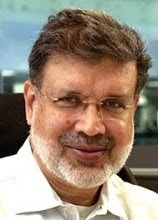
I remember standing in long queues at ration shops in Calcutta, Madras and Delhi when I was younger. Lines for food were a part of everyday life. You got sub-standard rice and dirty, large-grained sugar. The majority of Indians lived on rationed rice, sugar, kerosene, palmolein and even cloth. My children are the first generation to not experience food rationing.
It is interesting that you see fewer queues in India today. But don’t think for a moment that we are a land of plenty. You see fewer queues because there are far more ghosts.
The Green Revolution did fend off famine, but the definition of famine is very subjective. I was reminded of the fragility of India’s food situation this past week as the clangour about the delayed monsoon began to get deafening. Sharad Pawar assured the people that there were ample foodgrain stocks.
Probably very true and comforting if you are talking to real people, not ghosts. The trouble is that our ration shops (there are half a million of them) supply wheat, rice, sugar and kerosene to a lot of people who don’t exist. The government estimates that there are 65.2 million people below the poverty line (BPL) and so entitled to rations of 20 kilograms of foodgrains a month at half the “economic cost”. But there are actually more than 80 million ration cards issued to BPL families. That is not all. The government has issued a total of 223 million ration cards against a total estimated 180 million households. In other words, there are at least 43 million ghost cards.
While writing this, I read about prisoners in one U.S. state who get only two square meals a day three days a week. “This is inhumane,” a newspaper editorial said.
Over here, the government says blandly: “A National Sample Survey Exercise points towards the fact that about 5% of the total population in the country sleeps without two square meals a day.” That is 60 million people.
The Antyodaya Anna Yojana aims to help the truly destitute by selling them up to 35 kilograms of foodgrains a month -- rice at two rupees and wheat at three rupees a kilogram. As of April 2008, the government had identified 242,755 “poorest of the poor” families.
The UPA government has taken power almost exactly midway through the 11th Five Year Plan. Next Monday, Pranab Mukherjee might want to address some of the concerns spelled out in the Plan documents.
“There are large errors of exclusion and inclusion and ghost cards are common,” the Planning Commission says, adding that “leakages” are common – higher than 75% in Bihar and Punjab. During 2003-04, it estimates that 8 million tonnes of foodgrains out of 14 million allotted to BPL families never reached them. “For every 1 kilogram that was delivered to the poor, Government of India had to issue 2.23 kilograms” of foodgrains.
These figures have almost certainly worsened over the past year as the economy slowed down. And this is happening at a time when foodgrain prices have been rising steadily, despite misleading data that shows that India’s official measure of inflation, the Wholesale Price Index, is now slightly negative. Although experts say the WPI is a more reliable, broader measure, the Consumer Price Index, which takes in what the aam admi buys every day, has put inflation at over 10 percent in the 2008/09 fiscal year.
Higher prices hit the poor hardest. Statistics show that in rural India, the poor spend close to half their incomes on food, and higher food prices are deepening malnutrition.
Higher prices also mean changes in food habits. Cereal consumption has been falling steadily in rural India – from 15.3 kg per capita per month in 1972-73 to 13.4 kg in 1993-94 and 12.12 kg in 2004-05. This would not have been alarming if the poor were consuming more of other foods like milk, meat, vegetables and fruits. Over a twenty-year period, the Planning Commission says, per capita consumption of calories and protein has steadily declined in India. The calorie norm for the rural poor was set at 2400 calories a day, and rural India’s calorie consumption has dropped to 2047 calories from 2221. (In urban India, cereal consumption has fallen less precipitously, from 11.3 kg in 1973-74 to 10.6 kg in 1993-94 and 9.94 kg in 2004-05).
No wonder one-third of India’s adult population in 2005-06 had a body mass index below 18.5, the cut-off for malnutrition, or that India accounts for about half the developing world’s low-body-weight babies, and a very high rate of anaemia among women and girls.
The new government has said it will push a Food Security Act. What those 60 million forever hungry people need is nutritious food, and clean drinking water. Pawar and Mukherjee have their work cut out for them.
(This piece appeared in the Times of India on July 3, 2009)
Showing posts with label poverty. Show all posts
Showing posts with label poverty. Show all posts
Friday, July 3, 2009


Tuesday, June 9, 2009
On a Wing and a Prayer
Last week I called up a friend. She was on the train from Bangalore to Chennai. I was surprised. She is not the kind of person who travels by train. I asked her how long the train journey takes. Four and a half hours, she replied. So why are you taking a train when you are so busy and time is so important, I asked. Simple, she said. “It takes an hour and a half from my office to Bangalore airport. Then there is check-in, security checks, a delayed take-off because the plane arrived late, more time on the tarmac while waiting for clearance from Air Traffic Control, and then a 45-minute flight. I found it quicker to take a train. There is less stress, minimal turbulence, and I can read a book!”
This is really the story of India, and of countless surveys and papers in which Elephant India is compared with Tiger China. I have travelled to nearly every country in Asia and their airports always made me cringe in shame at the memory of Delhi or Mumbai. Changi, Chep Lak Kok, Incheon, Bangkok, Narita, Kansai, Beijing, Shanghai, Jakarta, Lahore – even Hanoi and Ho Chi Minh City and Phnom Penh – all made me wish I could return to Delhi and not have to descend dark stairs, get into a jerky bus, and enter a terminal building with a smelly entranceway to wait for baggage that is brought in on clanking trailers and thrown roughly on a creaky old belt by tired men.
Just before the elections, as my plane circled Delhi, I was struck by how similar our politics and our state-owned airline are. "We know you have a choice of other airlines (parties) but we appreciate your custom (votes)". Ageing aircraft (infrastructure) crewed by ageing staff (politicians). Endlessly stacked-up planes waiting for permission to land ... don't they conjure up a picture of endless project delays? "Don't blame us, blame the weather/air traffic control/technical faults/late arrival of our own plane" sound so much like "Don't blame us, blame our coalition partners/the opposition/the global economy/the ISI/late arrival of the monsoon".
It costs more to fly from Delhi to Kerala than to Singapore, but that's not our fault -- look at how our nasty trade partners are trying to get us to lower our tariffs and taxes so they can fill our skies with their planes. Lost baggage (promises)? Not our fault again -- it's our alliance partners. Please continue to give us your business (votes) -- we promise things will get better once we have that extra runway (a few more parliament seats). Coming off my plane, exhausted and wrung-out, I saw signs that promised a better airport by next year. Where would we be if we had not offered to host the Commonwealth Games?
Prime Minister Manmohan Singh has referred constantly to the need for more infrastructure to lift India out of the seven to eight percent growth rut. If India does not grow at a steady double-digit rate over the next decade, the elephant will stumble, and fall to its knees. Last week President Pratibha Patil referred to infrastructure as one of the key goals of the new government: “(Attention to recession-affected sectors) must be accompanied by measures to achieve a countercyclical expansion in public investment in infrastructure sectors including public-private partnerships in these sectors. Financing the investment will be a critical constraint and my Government is determined to ensure that innovative steps are taken in this area, consistent with a medium-term strategy of prudent fiscal management.”
Back in February, India’s interim budget said 50 new infrastructure projects worth Rs 67,700 crore ($14.5 billion) had been approved, and the India Infrastructure Finance Company, which will finance 60 percent of commercial loans in critical public-private partnerships, plans to raise Rs 30,000 crore ($6.8 billion) during the current fiscal year ending March 2010.
It helps if you are a Congress government with a clutch of Nehru-Gandhi names to christen every new populist spending plan. We have the Jawaharlal Nehru National Urban Renewal Mission, which has spent over Rs 50,000 crore ($10.6 billion) over the past four years on the “urban poor”. Under the Indira Awas Yojana, the government has built more than six million homes for rural poor. And now, President Patil has announced the Rajiv Awas Yojana, which aims to build a “slum free” India for the 62 million people living in shanties in the nation’s cities.
All these schemes come at a steep price. There was a huge surge in what can only be described as election-year fiscal profligacy in 2008/9. The government’s revenue deficit shot up to 4.4 percent of GDP against an estimated 1.0 percent – a four-fold increase. The fiscal deficit has alarmingly rocketed to Rs 326,515 crore ($69.5 billion) or 6 percent of GDP from the original estimate of 2.5 percent. In ordinary language, the Indian government was printing money – literally. And Reserve Bank of India figures bear this out. In the week ended May 29, currency in circulation totalled Rs 709,364 crore ($150.9 billion), a rise of Rs 96,699 crore ($20.6 billion) over a year earlier.
But what about the poor in India, the target of all this largesse? Are the country’s 1.2 billion people truly moving towards economic equity? In its Global Economic Prospects 2009 report last December, the World Bank noted that rising food prices were hitting the poor hardest. In urban areas in South Asia, it warned, poverty levels had gone up by as much as 4.4 percentage points – the highest in the developing world.
Already, 32.3 percent of the urban population and 43.3 percent of the rural population in South Asia is poor, that is, living at or below the “poverty benchmark” of 1.25 U.S. dollars (less than 60 rupees) a day. This is only slightly better than Sub-Saharan Africa. “Capital inflows have diminished, contributing to falloff in investment growth, particularly in India,” the World Bank said in a March 2009 update. “Fiscal support for slowing economies may face constraints in already quite high budget deficits.”
In her speech to Parliament last week, President Patil said new targets will soon be set for rural electrification by the new government. That will be of some consolation to Ramakanta Sethi, a Dalit boy from the fishing village of Kendrapara in Orissa. Ramakanta, who herded cattle during the day, did exceedingly well in his high school examination, studying at night with only a kerosene lantern for light. When Chief Minister Naveen Patnaik, re-elected last month with a landslide majority on a good-performance ticket, congratulated Ramakanta on his success, embarrassed officials promised to make amends for the darkness in Kendrapara. Electrifying news indeed.
(This appeared in the Khaleej Times on June 9, 2009)
This is really the story of India, and of countless surveys and papers in which Elephant India is compared with Tiger China. I have travelled to nearly every country in Asia and their airports always made me cringe in shame at the memory of Delhi or Mumbai. Changi, Chep Lak Kok, Incheon, Bangkok, Narita, Kansai, Beijing, Shanghai, Jakarta, Lahore – even Hanoi and Ho Chi Minh City and Phnom Penh – all made me wish I could return to Delhi and not have to descend dark stairs, get into a jerky bus, and enter a terminal building with a smelly entranceway to wait for baggage that is brought in on clanking trailers and thrown roughly on a creaky old belt by tired men.
Just before the elections, as my plane circled Delhi, I was struck by how similar our politics and our state-owned airline are. "We know you have a choice of other airlines (parties) but we appreciate your custom (votes)". Ageing aircraft (infrastructure) crewed by ageing staff (politicians). Endlessly stacked-up planes waiting for permission to land ... don't they conjure up a picture of endless project delays? "Don't blame us, blame the weather/air traffic control/technical faults/late arrival of our own plane" sound so much like "Don't blame us, blame our coalition partners/the opposition/the global economy/the ISI/late arrival of the monsoon".
It costs more to fly from Delhi to Kerala than to Singapore, but that's not our fault -- look at how our nasty trade partners are trying to get us to lower our tariffs and taxes so they can fill our skies with their planes. Lost baggage (promises)? Not our fault again -- it's our alliance partners. Please continue to give us your business (votes) -- we promise things will get better once we have that extra runway (a few more parliament seats). Coming off my plane, exhausted and wrung-out, I saw signs that promised a better airport by next year. Where would we be if we had not offered to host the Commonwealth Games?
Prime Minister Manmohan Singh has referred constantly to the need for more infrastructure to lift India out of the seven to eight percent growth rut. If India does not grow at a steady double-digit rate over the next decade, the elephant will stumble, and fall to its knees. Last week President Pratibha Patil referred to infrastructure as one of the key goals of the new government: “(Attention to recession-affected sectors) must be accompanied by measures to achieve a countercyclical expansion in public investment in infrastructure sectors including public-private partnerships in these sectors. Financing the investment will be a critical constraint and my Government is determined to ensure that innovative steps are taken in this area, consistent with a medium-term strategy of prudent fiscal management.”
Back in February, India’s interim budget said 50 new infrastructure projects worth Rs 67,700 crore ($14.5 billion) had been approved, and the India Infrastructure Finance Company, which will finance 60 percent of commercial loans in critical public-private partnerships, plans to raise Rs 30,000 crore ($6.8 billion) during the current fiscal year ending March 2010.
It helps if you are a Congress government with a clutch of Nehru-Gandhi names to christen every new populist spending plan. We have the Jawaharlal Nehru National Urban Renewal Mission, which has spent over Rs 50,000 crore ($10.6 billion) over the past four years on the “urban poor”. Under the Indira Awas Yojana, the government has built more than six million homes for rural poor. And now, President Patil has announced the Rajiv Awas Yojana, which aims to build a “slum free” India for the 62 million people living in shanties in the nation’s cities.
All these schemes come at a steep price. There was a huge surge in what can only be described as election-year fiscal profligacy in 2008/9. The government’s revenue deficit shot up to 4.4 percent of GDP against an estimated 1.0 percent – a four-fold increase. The fiscal deficit has alarmingly rocketed to Rs 326,515 crore ($69.5 billion) or 6 percent of GDP from the original estimate of 2.5 percent. In ordinary language, the Indian government was printing money – literally. And Reserve Bank of India figures bear this out. In the week ended May 29, currency in circulation totalled Rs 709,364 crore ($150.9 billion), a rise of Rs 96,699 crore ($20.6 billion) over a year earlier.
But what about the poor in India, the target of all this largesse? Are the country’s 1.2 billion people truly moving towards economic equity? In its Global Economic Prospects 2009 report last December, the World Bank noted that rising food prices were hitting the poor hardest. In urban areas in South Asia, it warned, poverty levels had gone up by as much as 4.4 percentage points – the highest in the developing world.
Already, 32.3 percent of the urban population and 43.3 percent of the rural population in South Asia is poor, that is, living at or below the “poverty benchmark” of 1.25 U.S. dollars (less than 60 rupees) a day. This is only slightly better than Sub-Saharan Africa. “Capital inflows have diminished, contributing to falloff in investment growth, particularly in India,” the World Bank said in a March 2009 update. “Fiscal support for slowing economies may face constraints in already quite high budget deficits.”
In her speech to Parliament last week, President Patil said new targets will soon be set for rural electrification by the new government. That will be of some consolation to Ramakanta Sethi, a Dalit boy from the fishing village of Kendrapara in Orissa. Ramakanta, who herded cattle during the day, did exceedingly well in his high school examination, studying at night with only a kerosene lantern for light. When Chief Minister Naveen Patnaik, re-elected last month with a landslide majority on a good-performance ticket, congratulated Ramakanta on his success, embarrassed officials promised to make amends for the darkness in Kendrapara. Electrifying news indeed.
(This appeared in the Khaleej Times on June 9, 2009)
Subscribe to:
Posts (Atom)