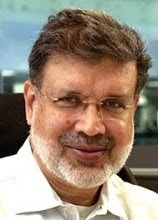
The Finance Minister gives with one hand, and takes away with the other. Income-tax exemption limits are raised marginally, but you will get hit on more items for service tax. And this is assuming that your food costs will drop a bit if Pranab Mukherjee's 300-crore magic formula works. For the full post go to http://bit.ly/indiabudget2
Showing posts with label India. Show all posts
Showing posts with label India. Show all posts
Monday, February 28, 2011


Saturday, August 1, 2009
Sharm el-Sheikh and appeasement: a lesson in history
O tempora! O mores! Were that
Leader after leader of the world’s biggest democracy is standing up to be counted with words that can only be described as desperation wrapped in dementia inside dyslexia.
“We have nothing to hide”; “We are an open book”. And, the day after Manmohan Singh delivered a courageous defence of the joint statement that has brought him so much vexation, Finance Minister Pranab Mukherjee made a speech in parliament that excoriated all the doubters.
And then Mukherjee said something that would make students of history blanch:
“Everybody knew that before the Second World War when Chamberlain entered into the Munich Pact, that it is not going to succeed, but it was considered necessary because they thought that the last effort should be made to save the world from the impending Second World War. This is the lesson of diplomacy, which we should not forget.
Dear, dear Pranabda. He was barely three years old when Neville Chamberlain gifted Hitler the Sudetenland, the border area in
Chamberlain told his people he had averted war. He was proud of his appeasement and believed he had given Hitler what seemed to be his “reasonable” demand. After all, the same year (1938) Time magazine voted Hitler the Man of the Year.
Mukherjee can be forgiven for not remembering Chamberlain’s words: “However much we may sympathise with a small nation confronted by a big and powerful neighbour … If we have to fight, it must be on larger issues than that. I am myself a man of peace to the depths of my soul; armed conflict between nations is a nightmare to me... War is a fearful thing, and we must be very clear before we embark on it, that it is really the great issues that are at stake.” (emphasis mine)
Ringing words. And ringing words were what Prime Minister Singh delivered in parliament on July 29. “I say with strength and conviction that dialogue and engagement is the best way forward,” he said. And later, “Let me say that in the affairs of two neighbours we should recall what President Reagan once said – trust but verify. There is no other way unless we go to war.”
Let us refresh our memories on what the Sharm el-Sheikh joint statement said. "Action on terrorism should not be linked to the Composite Dialogue process and these should not be bracketed. Prime Minister Singh said that
That bit of “bad drafting”, as Foreign Secretary Shiv Shankar Menon so helpfully put it, was followed by a wan ruling party damning the prime minister with ten days of silence and then a pallid statement earlier this week that left it to him to hoist himself out of trouble.
The opposition outcry was led by the Bharatiya Janata Party, and what a glorious example they set! Atal Behari Vajpayee's peace-making bus trip to Lahore in early 1999 was followed by the Kargil war, which Pervez Musharraf now proudly says forced India to discuss Kashmir (ergo, "all outstanding issues" above).
I well remember the ignominy of shepherd boys noticing that all the commanding heights along the Srinagar-Leh highway had been quietly occupied by heavily-armed Pakistani "irregulars". (Ten years ago the Pakistanis had not learnt phrases like "non-state actors"). And Musharraf, who gave
Anybody reporting on Kargil in 1999 knows that the Pakistanis agreed to end their "aggressive patrolling" -- another piece of doublespeak from Musharraf -- only after U.S. President Bill Clinton twisted Pakistani Prime Minister Nawaz Sharif's arm in
The sub-text in 1999 was the West’s fear that
Five months after Kargil, Pakistan-nurtured “freedom fighters” again put
Nothing daunted, Vajpayee invited Musharraf to the
Again and again,
The travesty is that Musharraf did underwrite secret talks between his emissaries and Indian envoys that brought the neighbours within sight of a tantalising
Manmohan Singh made an admirable speech on Wednesday. It was a good speech from a man of peace. But the genteel negotiators of
(This column appeared in Khaleej Times on August 1, 2009)
Tuesday, June 9, 2009
On a Wing and a Prayer
Last week I called up a friend. She was on the train from Bangalore to Chennai. I was surprised. She is not the kind of person who travels by train. I asked her how long the train journey takes. Four and a half hours, she replied. So why are you taking a train when you are so busy and time is so important, I asked. Simple, she said. “It takes an hour and a half from my office to Bangalore airport. Then there is check-in, security checks, a delayed take-off because the plane arrived late, more time on the tarmac while waiting for clearance from Air Traffic Control, and then a 45-minute flight. I found it quicker to take a train. There is less stress, minimal turbulence, and I can read a book!”
This is really the story of India, and of countless surveys and papers in which Elephant India is compared with Tiger China. I have travelled to nearly every country in Asia and their airports always made me cringe in shame at the memory of Delhi or Mumbai. Changi, Chep Lak Kok, Incheon, Bangkok, Narita, Kansai, Beijing, Shanghai, Jakarta, Lahore – even Hanoi and Ho Chi Minh City and Phnom Penh – all made me wish I could return to Delhi and not have to descend dark stairs, get into a jerky bus, and enter a terminal building with a smelly entranceway to wait for baggage that is brought in on clanking trailers and thrown roughly on a creaky old belt by tired men.
Just before the elections, as my plane circled Delhi, I was struck by how similar our politics and our state-owned airline are. "We know you have a choice of other airlines (parties) but we appreciate your custom (votes)". Ageing aircraft (infrastructure) crewed by ageing staff (politicians). Endlessly stacked-up planes waiting for permission to land ... don't they conjure up a picture of endless project delays? "Don't blame us, blame the weather/air traffic control/technical faults/late arrival of our own plane" sound so much like "Don't blame us, blame our coalition partners/the opposition/the global economy/the ISI/late arrival of the monsoon".
It costs more to fly from Delhi to Kerala than to Singapore, but that's not our fault -- look at how our nasty trade partners are trying to get us to lower our tariffs and taxes so they can fill our skies with their planes. Lost baggage (promises)? Not our fault again -- it's our alliance partners. Please continue to give us your business (votes) -- we promise things will get better once we have that extra runway (a few more parliament seats). Coming off my plane, exhausted and wrung-out, I saw signs that promised a better airport by next year. Where would we be if we had not offered to host the Commonwealth Games?
Prime Minister Manmohan Singh has referred constantly to the need for more infrastructure to lift India out of the seven to eight percent growth rut. If India does not grow at a steady double-digit rate over the next decade, the elephant will stumble, and fall to its knees. Last week President Pratibha Patil referred to infrastructure as one of the key goals of the new government: “(Attention to recession-affected sectors) must be accompanied by measures to achieve a countercyclical expansion in public investment in infrastructure sectors including public-private partnerships in these sectors. Financing the investment will be a critical constraint and my Government is determined to ensure that innovative steps are taken in this area, consistent with a medium-term strategy of prudent fiscal management.”
Back in February, India’s interim budget said 50 new infrastructure projects worth Rs 67,700 crore ($14.5 billion) had been approved, and the India Infrastructure Finance Company, which will finance 60 percent of commercial loans in critical public-private partnerships, plans to raise Rs 30,000 crore ($6.8 billion) during the current fiscal year ending March 2010.
It helps if you are a Congress government with a clutch of Nehru-Gandhi names to christen every new populist spending plan. We have the Jawaharlal Nehru National Urban Renewal Mission, which has spent over Rs 50,000 crore ($10.6 billion) over the past four years on the “urban poor”. Under the Indira Awas Yojana, the government has built more than six million homes for rural poor. And now, President Patil has announced the Rajiv Awas Yojana, which aims to build a “slum free” India for the 62 million people living in shanties in the nation’s cities.
All these schemes come at a steep price. There was a huge surge in what can only be described as election-year fiscal profligacy in 2008/9. The government’s revenue deficit shot up to 4.4 percent of GDP against an estimated 1.0 percent – a four-fold increase. The fiscal deficit has alarmingly rocketed to Rs 326,515 crore ($69.5 billion) or 6 percent of GDP from the original estimate of 2.5 percent. In ordinary language, the Indian government was printing money – literally. And Reserve Bank of India figures bear this out. In the week ended May 29, currency in circulation totalled Rs 709,364 crore ($150.9 billion), a rise of Rs 96,699 crore ($20.6 billion) over a year earlier.
But what about the poor in India, the target of all this largesse? Are the country’s 1.2 billion people truly moving towards economic equity? In its Global Economic Prospects 2009 report last December, the World Bank noted that rising food prices were hitting the poor hardest. In urban areas in South Asia, it warned, poverty levels had gone up by as much as 4.4 percentage points – the highest in the developing world.
Already, 32.3 percent of the urban population and 43.3 percent of the rural population in South Asia is poor, that is, living at or below the “poverty benchmark” of 1.25 U.S. dollars (less than 60 rupees) a day. This is only slightly better than Sub-Saharan Africa. “Capital inflows have diminished, contributing to falloff in investment growth, particularly in India,” the World Bank said in a March 2009 update. “Fiscal support for slowing economies may face constraints in already quite high budget deficits.”
In her speech to Parliament last week, President Patil said new targets will soon be set for rural electrification by the new government. That will be of some consolation to Ramakanta Sethi, a Dalit boy from the fishing village of Kendrapara in Orissa. Ramakanta, who herded cattle during the day, did exceedingly well in his high school examination, studying at night with only a kerosene lantern for light. When Chief Minister Naveen Patnaik, re-elected last month with a landslide majority on a good-performance ticket, congratulated Ramakanta on his success, embarrassed officials promised to make amends for the darkness in Kendrapara. Electrifying news indeed.
(This appeared in the Khaleej Times on June 9, 2009)
This is really the story of India, and of countless surveys and papers in which Elephant India is compared with Tiger China. I have travelled to nearly every country in Asia and their airports always made me cringe in shame at the memory of Delhi or Mumbai. Changi, Chep Lak Kok, Incheon, Bangkok, Narita, Kansai, Beijing, Shanghai, Jakarta, Lahore – even Hanoi and Ho Chi Minh City and Phnom Penh – all made me wish I could return to Delhi and not have to descend dark stairs, get into a jerky bus, and enter a terminal building with a smelly entranceway to wait for baggage that is brought in on clanking trailers and thrown roughly on a creaky old belt by tired men.
Just before the elections, as my plane circled Delhi, I was struck by how similar our politics and our state-owned airline are. "We know you have a choice of other airlines (parties) but we appreciate your custom (votes)". Ageing aircraft (infrastructure) crewed by ageing staff (politicians). Endlessly stacked-up planes waiting for permission to land ... don't they conjure up a picture of endless project delays? "Don't blame us, blame the weather/air traffic control/technical faults/late arrival of our own plane" sound so much like "Don't blame us, blame our coalition partners/the opposition/the global economy/the ISI/late arrival of the monsoon".
It costs more to fly from Delhi to Kerala than to Singapore, but that's not our fault -- look at how our nasty trade partners are trying to get us to lower our tariffs and taxes so they can fill our skies with their planes. Lost baggage (promises)? Not our fault again -- it's our alliance partners. Please continue to give us your business (votes) -- we promise things will get better once we have that extra runway (a few more parliament seats). Coming off my plane, exhausted and wrung-out, I saw signs that promised a better airport by next year. Where would we be if we had not offered to host the Commonwealth Games?
Prime Minister Manmohan Singh has referred constantly to the need for more infrastructure to lift India out of the seven to eight percent growth rut. If India does not grow at a steady double-digit rate over the next decade, the elephant will stumble, and fall to its knees. Last week President Pratibha Patil referred to infrastructure as one of the key goals of the new government: “(Attention to recession-affected sectors) must be accompanied by measures to achieve a countercyclical expansion in public investment in infrastructure sectors including public-private partnerships in these sectors. Financing the investment will be a critical constraint and my Government is determined to ensure that innovative steps are taken in this area, consistent with a medium-term strategy of prudent fiscal management.”
Back in February, India’s interim budget said 50 new infrastructure projects worth Rs 67,700 crore ($14.5 billion) had been approved, and the India Infrastructure Finance Company, which will finance 60 percent of commercial loans in critical public-private partnerships, plans to raise Rs 30,000 crore ($6.8 billion) during the current fiscal year ending March 2010.
It helps if you are a Congress government with a clutch of Nehru-Gandhi names to christen every new populist spending plan. We have the Jawaharlal Nehru National Urban Renewal Mission, which has spent over Rs 50,000 crore ($10.6 billion) over the past four years on the “urban poor”. Under the Indira Awas Yojana, the government has built more than six million homes for rural poor. And now, President Patil has announced the Rajiv Awas Yojana, which aims to build a “slum free” India for the 62 million people living in shanties in the nation’s cities.
All these schemes come at a steep price. There was a huge surge in what can only be described as election-year fiscal profligacy in 2008/9. The government’s revenue deficit shot up to 4.4 percent of GDP against an estimated 1.0 percent – a four-fold increase. The fiscal deficit has alarmingly rocketed to Rs 326,515 crore ($69.5 billion) or 6 percent of GDP from the original estimate of 2.5 percent. In ordinary language, the Indian government was printing money – literally. And Reserve Bank of India figures bear this out. In the week ended May 29, currency in circulation totalled Rs 709,364 crore ($150.9 billion), a rise of Rs 96,699 crore ($20.6 billion) over a year earlier.
But what about the poor in India, the target of all this largesse? Are the country’s 1.2 billion people truly moving towards economic equity? In its Global Economic Prospects 2009 report last December, the World Bank noted that rising food prices were hitting the poor hardest. In urban areas in South Asia, it warned, poverty levels had gone up by as much as 4.4 percentage points – the highest in the developing world.
Already, 32.3 percent of the urban population and 43.3 percent of the rural population in South Asia is poor, that is, living at or below the “poverty benchmark” of 1.25 U.S. dollars (less than 60 rupees) a day. This is only slightly better than Sub-Saharan Africa. “Capital inflows have diminished, contributing to falloff in investment growth, particularly in India,” the World Bank said in a March 2009 update. “Fiscal support for slowing economies may face constraints in already quite high budget deficits.”
In her speech to Parliament last week, President Patil said new targets will soon be set for rural electrification by the new government. That will be of some consolation to Ramakanta Sethi, a Dalit boy from the fishing village of Kendrapara in Orissa. Ramakanta, who herded cattle during the day, did exceedingly well in his high school examination, studying at night with only a kerosene lantern for light. When Chief Minister Naveen Patnaik, re-elected last month with a landslide majority on a good-performance ticket, congratulated Ramakanta on his success, embarrassed officials promised to make amends for the darkness in Kendrapara. Electrifying news indeed.
(This appeared in the Khaleej Times on June 9, 2009)
Saturday, June 6, 2009
Putting It All Together Again (17 May 2009)
“India is a geographical term. It is no more a united nation than the Equator,” Winston Churchill said in 1931. At times during this election campaign that description seemed apt.
The surge of collective outrage after the November attacks in Mumbai quickly dissipated in a high-decibel assault of television and radio advertisements, voice and text messages and everything from YouTube to podcasts that painted every politician in the most garishly evil of hues. What else do you expect when you have to woo 714 million voters, many of whom would not even have heard the names of the 1,000 – yes, exactly that number – “registered unrecognised parties” in the field.
And yet, after a long, long time India’s voters have spoken in a clear voice. It is easy to forget, in the tumult and velocity that besiege us, that we teeter on the edge of the first decade of the 21st century. India has just decided to endorse a gentleman prime minister after one of the crudest campaigns in the past 62 years. Kandahar, Kandhamal, Godhra were thrown around in a frenzy of finger-pointing, but the reality is that a huge number of young Indians, 18 to 21, voted for the first time this year and that begins to explain the seismic shift that has occurred.
A few weeks ago, Manmohan Singh listed Naxalism, regionalism, terrorism and communalism as major dangers facing India. He failed to list negativism. Much is being made of the fact that Singh is only the second prime minister since Independence to sail into a second full term in office. Here is a 76-year-old man who speaks in a near-whisper, his heart patched together by much bypass surgery, and yet an electorate that grows younger by the day decides to give him more time to work for a better, more prosperous – and more optimistic – nation. Indians are weary of bad news.
It is no accident that Nitish Kumar in Bihar, Naveen Patnaik in Orissa, and Sheila Dikshit in Delhi have triumphed so spectacularly on a performance-based scorecard. The huge mini-nation of the National Capital Region is crawling with young Biharis who work in a myriad of service jobs – plumbers, electricians, watchmen, drivers. They are all exiles from a failed state, from a region that Lalu Prasad Yadav, feted by business schools for introducing clay tea cups on Indian trains, plunged into near-total darkness. The young man from Champaran who came calling on Saturday saw Nitish’s victory in simple terms. “Bihar had fourteen sugar mills in the past,” he said. “Now there are two. But things are beginning to work. There is light again.” A small irony – Lalu’s election symbol is a “hurricane lamp”. So it is performance that has been rewarded – nowhere more so than in Delhi, where Dikshit now not only is a third-term chief minister but has a 100% sweep of parliamentary seats to burnish her image. And in Orissa, where communal violence appeared to have held Patnaik in a pincer grip last year, the Bharatiya Janata Party has been decisively routed and Patnaik’s Biju Janata Dal has won a majority in both the Assembly and parliament elections.
So the only pattern you can see in the election is of hope -- that the global recession will not bite too deep in India, that there will be jobs and income for more people, that universal healthcare and education will begin to glimmer a little brighter on the horizon, that India will take its place as a “soft power” – a concept that Shashi Tharoor is pushing.
The former UN diplomat donned veshthi and angavastram to ride to a decisive victory as a Congress candidate in Thiruvananthapuram. Although he is not, age-wise, a true “digital native”, Tharoor has been adept at using the newest tools of communication. He has regularly transmitted campaign updates from his “TwitterBerry”. “Still sinking in – a majority of over 100,000 votes!” he relayed on Saturday. So Tharoor, and Jyotiraditya Scindia, Jitin Prasada, Milind Deora, Sachin Pilot, Priya Dutt, and Deepender Hooda form the storm-troopers of the revitalised Congress.
Indeed, in picking its younger candidates the Congress moved decisively to jettison some of its older war-horses who carried way too much baggage – the likes of Arjun Singh and A.R. Antulay. Here it differed from the BJP, whose leadership looked too old and set in its ways. The voters firmly hammered down the overweening arrogance that much of the old political class displayed – across party lines. And they gave some the fright of their lives – P. Chidambaram won by an embarrassing 3,354 votes in Sivaganga.
In the end, people seemed to want to see a return to modesty, even a bit of humility, as they recoiled from the brazen declarations of assets that candidates made when they got their tickets – humble servants of the people whose wealth multiplied by long strings of zeros from one election to the next.
So here you now have a woman whose marble likenesses rear up like poison mushrooms, and a Communist power couple who have never stood for election, or the wily caste-based politician from a Gangetic state who once made it to the Guinness Book, and a chain-gang of murderers, rapists and gangster chieftains who either manipulated the criminal justice system or put their wives or other proxies up – and they have all been humbled in one way or another.
“The trouble is that there are too many old leaders who will not let us do anything,” Manmohan Singh told me quietly in a 2006 conversation. It was a long flight from Delhi, at the mid-point of what was to be his first term as prime minister. “There is so much to do.”
This election has answered Manmohan Singh’s prayers, but there is indeed a lot to do. The Congress manifesto listed several action points – a growth budget within 45 days of taking power, Right to Food legislation, expanded education spending, and an ambitious plan to link every village in the country to a broadband network within three years.
“Rapid growth is an essential condition for getting rid of poverty,” Singh told a group of editors just before the campaign started. He noted that the economy had grown an average of 8.6% over the past five years and population growth had slowed to 1.6%. “If we can sustain that pace, in ten years we will double national income.” In the end, that is what counts for one-sixth of humanity.
(This piece appeared in Khaleej Times on May 20, 2009)
The surge of collective outrage after the November attacks in Mumbai quickly dissipated in a high-decibel assault of television and radio advertisements, voice and text messages and everything from YouTube to podcasts that painted every politician in the most garishly evil of hues. What else do you expect when you have to woo 714 million voters, many of whom would not even have heard the names of the 1,000 – yes, exactly that number – “registered unrecognised parties” in the field.
And yet, after a long, long time India’s voters have spoken in a clear voice. It is easy to forget, in the tumult and velocity that besiege us, that we teeter on the edge of the first decade of the 21st century. India has just decided to endorse a gentleman prime minister after one of the crudest campaigns in the past 62 years. Kandahar, Kandhamal, Godhra were thrown around in a frenzy of finger-pointing, but the reality is that a huge number of young Indians, 18 to 21, voted for the first time this year and that begins to explain the seismic shift that has occurred.
A few weeks ago, Manmohan Singh listed Naxalism, regionalism, terrorism and communalism as major dangers facing India. He failed to list negativism. Much is being made of the fact that Singh is only the second prime minister since Independence to sail into a second full term in office. Here is a 76-year-old man who speaks in a near-whisper, his heart patched together by much bypass surgery, and yet an electorate that grows younger by the day decides to give him more time to work for a better, more prosperous – and more optimistic – nation. Indians are weary of bad news.
It is no accident that Nitish Kumar in Bihar, Naveen Patnaik in Orissa, and Sheila Dikshit in Delhi have triumphed so spectacularly on a performance-based scorecard. The huge mini-nation of the National Capital Region is crawling with young Biharis who work in a myriad of service jobs – plumbers, electricians, watchmen, drivers. They are all exiles from a failed state, from a region that Lalu Prasad Yadav, feted by business schools for introducing clay tea cups on Indian trains, plunged into near-total darkness. The young man from Champaran who came calling on Saturday saw Nitish’s victory in simple terms. “Bihar had fourteen sugar mills in the past,” he said. “Now there are two. But things are beginning to work. There is light again.” A small irony – Lalu’s election symbol is a “hurricane lamp”. So it is performance that has been rewarded – nowhere more so than in Delhi, where Dikshit now not only is a third-term chief minister but has a 100% sweep of parliamentary seats to burnish her image. And in Orissa, where communal violence appeared to have held Patnaik in a pincer grip last year, the Bharatiya Janata Party has been decisively routed and Patnaik’s Biju Janata Dal has won a majority in both the Assembly and parliament elections.
So the only pattern you can see in the election is of hope -- that the global recession will not bite too deep in India, that there will be jobs and income for more people, that universal healthcare and education will begin to glimmer a little brighter on the horizon, that India will take its place as a “soft power” – a concept that Shashi Tharoor is pushing.
The former UN diplomat donned veshthi and angavastram to ride to a decisive victory as a Congress candidate in Thiruvananthapuram. Although he is not, age-wise, a true “digital native”, Tharoor has been adept at using the newest tools of communication. He has regularly transmitted campaign updates from his “TwitterBerry”. “Still sinking in – a majority of over 100,000 votes!” he relayed on Saturday. So Tharoor, and Jyotiraditya Scindia, Jitin Prasada, Milind Deora, Sachin Pilot, Priya Dutt, and Deepender Hooda form the storm-troopers of the revitalised Congress.
Indeed, in picking its younger candidates the Congress moved decisively to jettison some of its older war-horses who carried way too much baggage – the likes of Arjun Singh and A.R. Antulay. Here it differed from the BJP, whose leadership looked too old and set in its ways. The voters firmly hammered down the overweening arrogance that much of the old political class displayed – across party lines. And they gave some the fright of their lives – P. Chidambaram won by an embarrassing 3,354 votes in Sivaganga.
In the end, people seemed to want to see a return to modesty, even a bit of humility, as they recoiled from the brazen declarations of assets that candidates made when they got their tickets – humble servants of the people whose wealth multiplied by long strings of zeros from one election to the next.
So here you now have a woman whose marble likenesses rear up like poison mushrooms, and a Communist power couple who have never stood for election, or the wily caste-based politician from a Gangetic state who once made it to the Guinness Book, and a chain-gang of murderers, rapists and gangster chieftains who either manipulated the criminal justice system or put their wives or other proxies up – and they have all been humbled in one way or another.
“The trouble is that there are too many old leaders who will not let us do anything,” Manmohan Singh told me quietly in a 2006 conversation. It was a long flight from Delhi, at the mid-point of what was to be his first term as prime minister. “There is so much to do.”
This election has answered Manmohan Singh’s prayers, but there is indeed a lot to do. The Congress manifesto listed several action points – a growth budget within 45 days of taking power, Right to Food legislation, expanded education spending, and an ambitious plan to link every village in the country to a broadband network within three years.
“Rapid growth is an essential condition for getting rid of poverty,” Singh told a group of editors just before the campaign started. He noted that the economy had grown an average of 8.6% over the past five years and population growth had slowed to 1.6%. “If we can sustain that pace, in ten years we will double national income.” In the end, that is what counts for one-sixth of humanity.
(This piece appeared in Khaleej Times on May 20, 2009)
Subscribe to:
Posts (Atom)